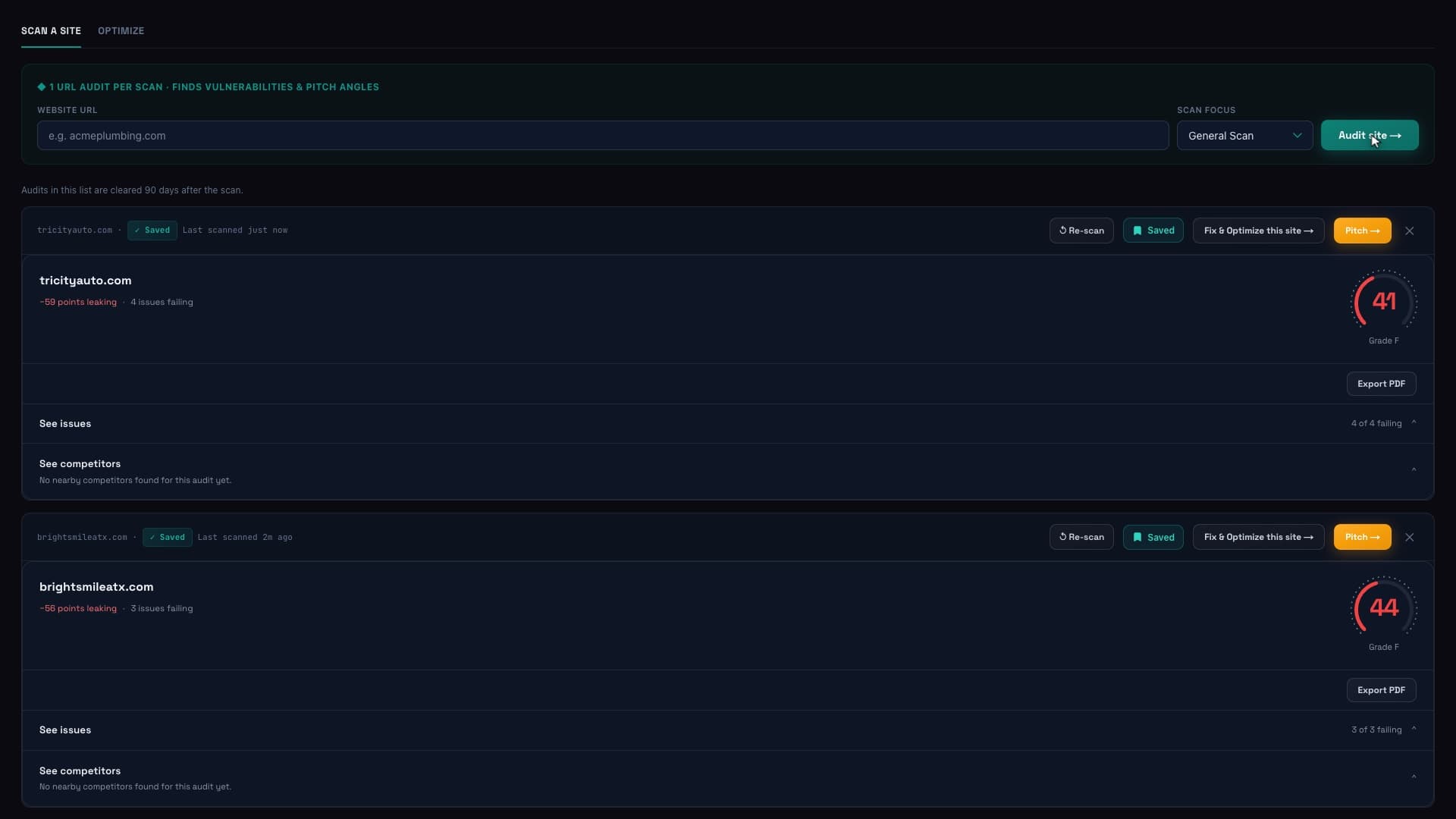
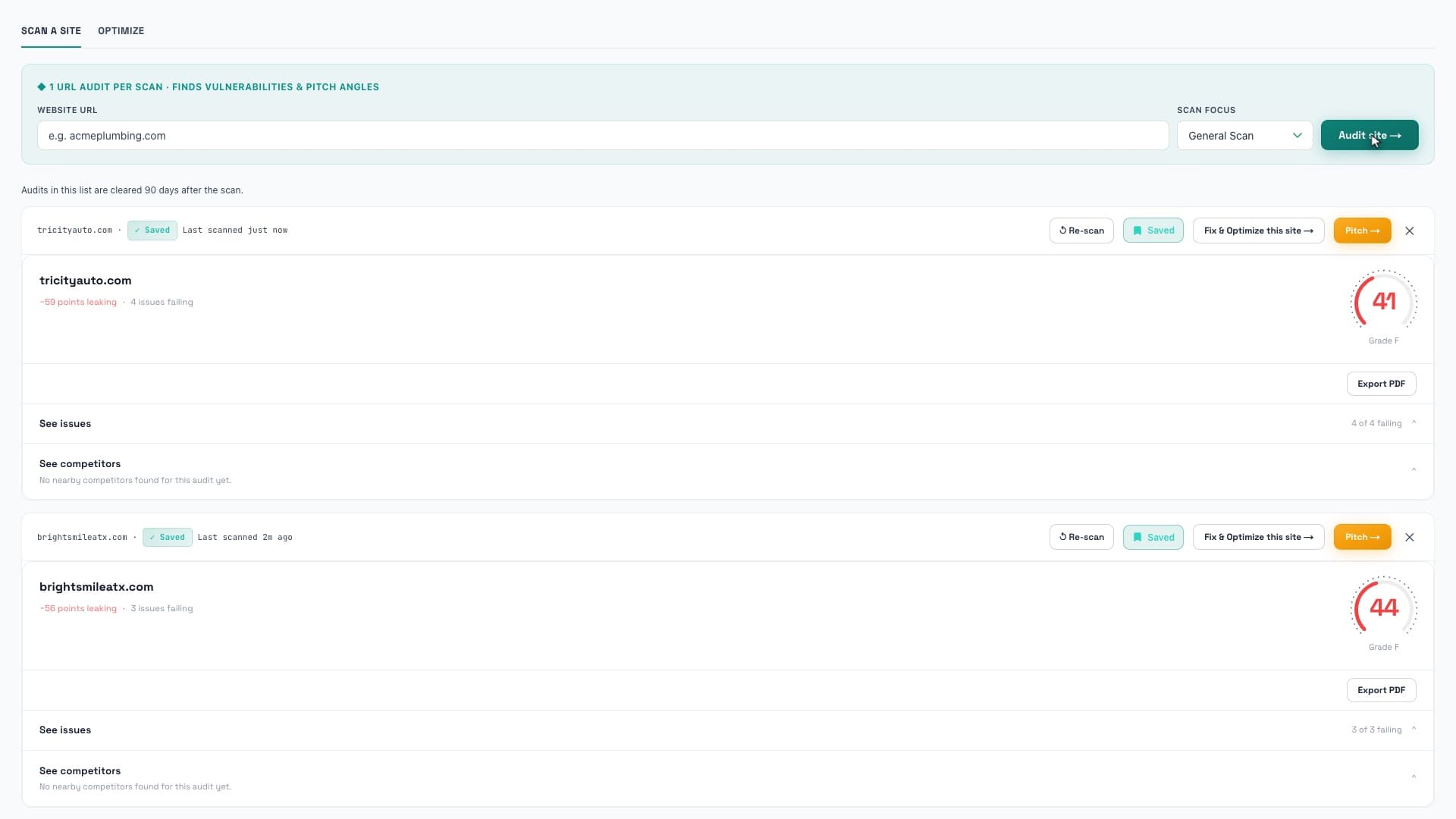
Auditing a website you don't own is easy. Fixing it is not. You can run a scan, hand a business owner a list of problems (missing meta descriptions, a robots.txt blocking search engines, images with no alt text) and then what? Most tools stop exactly there, at the report. The owner nods, says "we'll get someone to look at that," and it sits in a backlog forever, because you had no way to actually touch their code.
Watch: SEO clients from the audit (1 min)
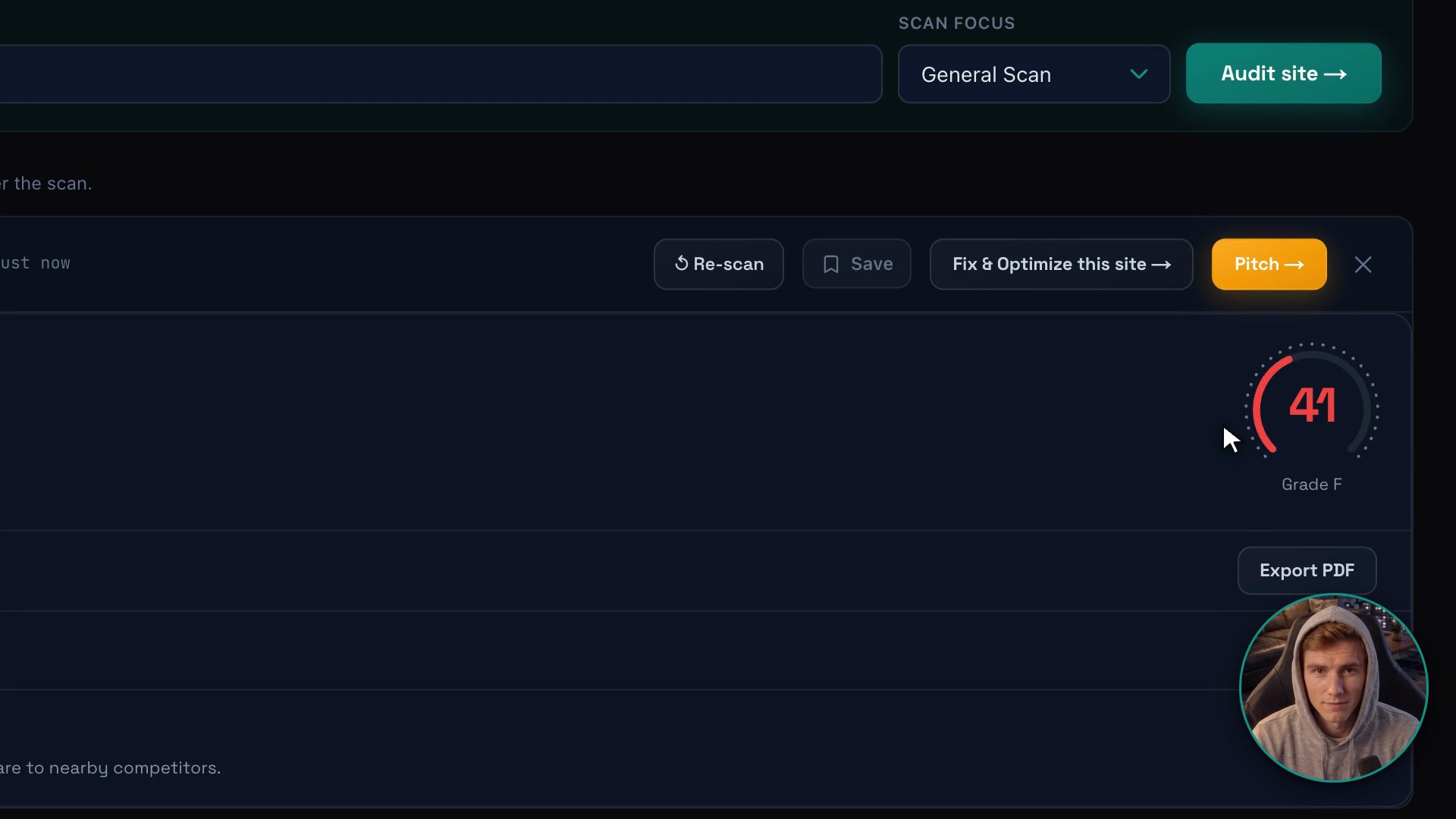
Create public/robots.txt with a permissive rule set so search engines can crawl the site.
(new file)
User-agent: *
Allow: /
bizvoid closes that gap for sites that run on GitHub. Connect a client's repo, and an audit-detected issue doesn't just get flagged: it gets turned into a real, reviewable pull request against their actual codebase. Nothing merges without them approving it. But instead of a report telling them what's wrong, you hand them a diff that already fixes it.
The report-only ceiling
A written audit is genuinely useful for the sale: it's what proves you found something real. But it has a ceiling with a site you didn't build:
- You have no write access. Even if you know exactly what to change, you can't touch their repo without being asked, and asking cold feels intrusive.
- The owner has no dev on staff. That's often why the site is broken in the first place. "Here's what's wrong" is a homework assignment for someone who has no one to hand it to.
- Reports don't build trust the way a working fix does. Anyone can list problems. Shipping the fix is the thing that actually proves the value.
How the GitHub fix path works
Once a client connects their GitHub repository, bizvoid's audit-to-fix pipeline can act on a specific set of flaw types the audit engine already knows how to detect and repair safely:
- robots.txt problems: missing robots.txt, or one accidentally blocking all crawlers
- Missing or weak meta tags: title and description tags generated from the business's real profile, not placeholder text
- Missing image alt text: accessibility and SEO fixes applied across the affected images
- Missing analytics and tracking: Analytics, Google Tag Manager, Meta Pixel, TikTok Pixel snippets, where the business wants them installed
- Missing security headers: on WordPress sites specifically, where the connector has a real option to set them
For each of these, the flow is the same: propose, review, apply.
- Propose. bizvoid computes a real diff against the repo's current files: the exact change it would make, shown to you before anything happens.
- Review. You (and the site owner, if you loop them in) see the actual before/after, not a description of a change.
- Apply. Only on explicit approval does bizvoid push a branch and open a real pull request on GitHub.
The apply step doesn't just replay what you saw in the preview, either. It re-computes the same fix fresh, against whatever the repo looks like right at that moment, and compares it to what you approved. If the repo changed in between (someone else pushed a commit, the file moved) the apply is rejected and you're asked to re-preview rather than pushing a fix against a file that's already moved out from under it. Nothing gets force-pushed on stale information.
The owner stays in control
This is the part worth saying plainly: bizvoid never merges anything. The output of a fix is a pull request, sitting in the client's own repository, waiting for a human to look at the diff and click merge. If they don't like the change, they close the PR and nothing happened. If they do, they've merged a real commit, and they watched exactly what changed before it went in. It's the same review process any developer on their team would go through, just triggered by an audit instead of a ticket.
Why this is the better pitch
Compare the two messages a prospect can receive from you:
"Your site is missing meta descriptions on 6 pages and has no robots.txt: you should get someone to fix that."
"Your site is missing meta descriptions on 6 pages and has no robots.txt: I opened a pull request that fixes both. Take a look and merge whenever you're ready."
The first is advice. The second is work already done, sitting one click from live. That difference is what turns an audit from a conversation-starter into a closed deal.
What it costs
Pushing a real fix to a connected GitHub repo requires a paid plan: Starter, Pro, or Agency. It's not available on the free tier, since unlike most other audit and pitch actions, a GitHub push has no per-use credit cost to meter, so plan tier is the gate instead. Fix pushes are also rate-limited to five an hour per account: this is a deliberate, occasional action against a client's real repository, not a bulk operation.
Some findings have no pull request
A few of the gaps an audit turns up sit outside the repo. "No after-hours answering found" or a run of Google reviews about calls nobody returned won't close with a diff, because the fix lives on the phone line. bizvoid links those findings to its Voice Agents, in beta: a receptionist that answers the business's calls from a script you write and hands off to a person, or a missed-call text-back agent that texts anyone who hung up unanswered.
That makes a strong two-part follow-up: here is a pull request for the site, and here is an agent for the calls. The pull request is a one-off job. The agent runs every month, and you can bill it monthly through bizvoid's Client Billing (approval required).
The takeaway
You don't need to have built a site to fix it anymore. If it lives in a GitHub repo, an audit-detected issue can go from "here's what's wrong" to "here's the pull request that fixes it" in the same sitting, with the owner reviewing every line before it ever touches their live site.